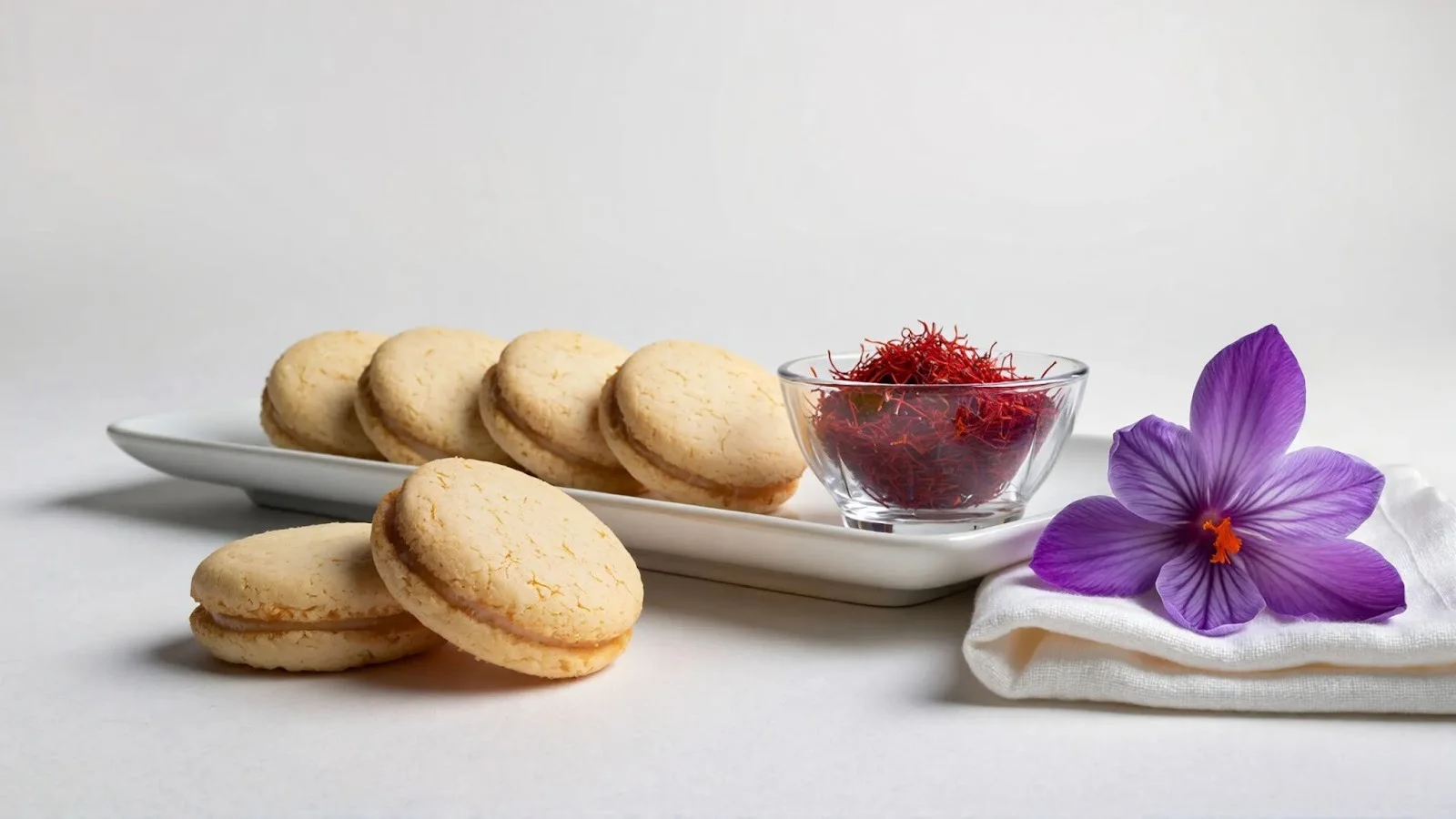
The main difference in Negin vs Sargol saffron is usually thread presentation. Negin commonly emphasizes longer, largely intact all-red threads. Sargol commonly contains shorter red stigma portions and more broken pieces. That distinction can matter in a gift or a dish with visible threads, but it does not establish which batch will deliver better color, aroma, or flavor.
For cooking, compare the actual saffron, its handling history, available test information, and price per gram. For presentation, decide how much intact threads matter to you. A listing such as Golden Saffron’s 2-gram saffron thread package provides a concrete package weight to evaluate; a grade name alone cannot settle the buying decision.
These are common commercial descriptions, not promises about every seller’s product. Check the listing and supporting information for the particular package.
| Comparison | Negin | Sargol |
|---|---|---|
| Typical appearance | Longer all-red stigma threads | Shorter all-red stigma portions |
| Thread integrity | Usually selected for fewer broken pieces | May include more fragments and uneven lengths |
| Preparation uses | Whole-thread presentation, crushing, or infusion | Crushing and infusion for rice, broth, and sauces |
| Presentation value | Often preferred for visible, uniform threads | Appearance may matter less in the finished dish |
| Pricing tendency | Often carries an intact-thread premium | May cost less; compare equal weights |
| What the name cannot guarantee | Potency, authenticity, freshness, or value | Potency, authenticity, freshness, or value |
The useful distinction starts with the plant material and the way it is selected. It becomes a quality comparison only when you have evidence about the batches.

Both names commonly describe the red stigma material of Crocus sativus. The paler yellow style is a different part of the flower’s female reproductive structure. All-red sorting aims to exclude that visible pale material; it does not mean that every red thread has identical composition. For a basic introduction to the plant and spice, read our guide to what is saffron.
Published research on visual classification describes Negin samples as mostly whole stigmas and Sargol as red stigma material with more breakage. Shorter pieces can result from preparation, sorting, or subsequent handling. A broken piece can still be genuine saffron.
Ask whether the photographs show the actual product and whether the seller explains its sorting criteria. Look at the whole portion rather than one unusually attractive strand. There is no useful universal millimeter rule to apply across unrelated listings without an identified specification.
Visible yellow material can help you question an all-red description. Thread shape and color also offer clues, but appearance alone cannot confirm purity or identify every form of adulteration.
No. Longer threads do not automatically mean stronger saffron per gram. Coloring strength, aroma, and taste are related parts of the experience, but they are not interchangeable measurements.
Drying and storage can change these components differently. Research comparing freshly dried and stored samples found changes in their chemical profiles rather than a single, uniform decline in every component. That makes “more aromatic” an unreliable shortcut for “fresher” or “better in every respect.”
A laboratory coloring result is useful evidence about the measured property. It does not tell you exactly how a broth will smell or whether you will prefer the saffron in a delicate sauce. Preparation and the other ingredients also shape the result. Neither grade name replaces that context, and one impressive number should not become an overall sensory score.
A Negin premium may pay for more selective sorting and attractive intact threads. Depending on the seller, processing, packaging, batch quality, and brand positioning can also contribute. There is no fixed premium that applies across the market.
Separate what the seller demonstrates from what the price merely suggests. A more expensive package might offer documented batch information, carefully protected threads, or a presentation you value. It might also cost more because it is a smaller package or comes in elaborate packaging.
Compare the offers in practical terms: net weight, product information, packaging, and total delivered cost. If the listing supplies only a grade adjective and a photograph, you have limited grounds for interpreting the premium as stronger cooking performance.
A lower Sargol price is equally conditional. It becomes a good buy when the actual saffron meets your needs, not simply because the package costs less.
Use two separate checks: what evidence describes the saffron, and how well does that evidence connect to the product you can buy?
Negin, Sargol, and Super Negin are commercial sorting descriptions. ISO specifications and test methods address defined requirements and measurements. These systems answer different questions; a trade name does not automatically establish a laboratory classification.
Trade names should also be distinguished from origin and product-range labels. For that separate comparison, see our guide to Spanish saffron vs Persian saffron. Check the stated source of each actual product rather than treating a name as proof of origin.
The current specification is ISO 3632-1:2025, which replaced the 2011 edition and covers saffron in filament, cut-filament, and powder forms. ISO 3632-2:2010 covers test methods and remains current. Check which edition a report uses rather than assuming all documents refer to the same requirements.
Testing according to an ISO method is not certification of the seller by ISO. Likewise, a reported quality classification is not a tasting verdict. Chemical measurements, sensory assessment, and testing for particular adulterants provide different kinds of information.
When reviewing a report, inspect:
Method matters, too. A published comparison found that a UV-visible estimate associated with safranal did not correlate with safranal determined by HPLC-DAD in the samples studied. Avoid reading an aroma-related laboratory value as a complete measurement of perceived aroma.
Ask the seller for documentation that identifies the tested sample and explains how it relates to the saffron being offered. A result for one sample should not be extended to every package.
Harvest information and handling history make the comparison more useful than a grade label alone. A packing date tells you when saffron entered its package, not necessarily when the flowers were harvested.
Ask for the harvest season when available, how the saffron was dried, and how it was stored before packing. Drying is part of developing the finished spice, so “fresh” should not be reduced to the shortest possible time since picking. The relevant question is whether processing and storage protected useful quality.
After purchase, limit exposure to moisture, light, and heat. Keep the container tightly closed in a cool, dark cupboard away from the stove. Use dry utensils and avoid opening it over a steaming pot. For practical handling guidance, read our guide on how to store saffron.
Do not rank freshness solely by a deep-red photograph, a strong initial smell, or a home water test. Lighting changes photographs, and household infusion conditions vary. None of those observations supplies a harvest date or substitutes for appropriate analysis.
If one seller provides a traceable harvest and storage history while another offers only “premium Negin,” compare the difference in evidence before comparing the adjectives. Missing information does not prove poor saffron, but it leaves more of the purchase uncertain.
Choose around your intended use, then check quality and cost. The most attractive package and the most economical cooking purchase need not be the same offer.

Sargol can offer better value when its quality is suitable and its price is lower. Once you crush the threads and prepare an infusion, preserving their original length has less practical importance.
For rice, broth, or a sauce, think about how the saffron enters the food. If you plan to crush it and distribute the infusion throughout the dish, an intact-thread appearance may contribute little to your goal. Short pieces are not automatically a disadvantage for that preparation.
For controlled preparation, measure the saffron, crush it gently in a clean, dry mortar, and follow the recipe’s infusion instructions. Rinse clinging particles into the recipe with some of its liquid. See our guide on how to grind saffron for the technique.
Buying threads and crushing them yourself also lets you examine the material before grinding. It does not authenticate the purchase, but it preserves more visible information than a powder-only listing.
Do not assume Sargol will require more saffron or extract faster solely because of the name. If you compare purchases in your kitchen, use the same recipe and preparation, record the weight, and judge the actual results.

Negin’s intact-thread presentation can justify a premium when you or the recipient will appreciate it. Long threads can be appealing in a small container or when they remain visible in the finished dish.
For a culinary gift, evaluate the whole experience: a securely closed container, clear net weight, useful product information, and packaging that protects the saffron. Attractive presentation is a legitimate reason to choose a product, even when you are not claiming superior potency.
Consider the recipient’s habits. Someone who enjoys examining and preparing spices may value the threads themselves. Someone who usually grinds saffron into rice may care more about a practical package size and clear storage instructions.
A gift box cannot establish authenticity, and the word Negin cannot establish freshness. Keep those checks separate from the pleasure of giving an attractive ingredient.
Compare by net saffron weight, not thread count or loosely filled teaspoons. Different lengths and packing arrangements make those measures unreliable for evaluating equal quantities.
Price per gram = package price ÷ net saffron weight in grams.
Saffron cost per recipe = price per gram × grams used.
Consider this hypothetical comparison in US dollars, excluding shipping and tax:
The difference is $0.30 for that assumed recipe quantity. These are invented example prices for arithmetic, not current offers, a tested dose, evidence of equal potency, or a guaranteed serving count.
If you ultimately prefer different weights of the two actual products, recalculate using those weights. Also compare shipping and tax on the same basis, and avoid buying a larger package solely for its lower unit price if you will struggle to use it.
For everyday cooking, prioritize suitable batch quality, useful documentation, and the cost of the amount you actually use. Sargol may be the better-value choice when those checks support it. Negin can justify a premium when intact-thread presentation matters in a dish or gift.
Neither name alone proves stronger flavor, freshness, or authenticity. Decide which qualities matter for your purpose, then compare the evidence behind the package. If you are ready to buy saffron, review Golden Saffron’s product details alongside your cooking or gifting needs.
Super Negin is generally marketed as a more selective presentation within the Negin family, often emphasizing intact, visually uniform all-red threads. The distinction varies by supplier. It is not automatically an ISO classification or proof of greater potency. Ask the seller what its selection criteria mean and review evidence for the actual batch.
Yes. The same weight is a practical starting point when substituting Sargol for Negin, especially when the saffron will be crushed and infused. Keep preparation consistent, then adjust future batches for the actual saffron and your preference. Equal weights do not guarantee identical strength, and counting threads is unreliable when their sizes differ.
No. Genuine saffron can contain short or broken red stigma pieces, and breakage alone cannot diagnose adulteration. Long, attractive threads also do not prove authenticity. Evaluate the seller’s traceability, product information, and relevant laboratory testing. Visual inspection or a home water test cannot rule out every adulterant or establish the quality of an entire batch.

Zoe Grace Carter is a passionate food scientist with a remarkable academic background, holding a PhD from the prestigious Cornell University. At the youthful age of 30, she brings a wealth of knowledge and expertise to the world of culinary exploration. Zoe is on a mission to unravel the mysteries of saffron and share her insights with the world through her captivating writings on Goldensaffron.com.


 Featured Product
Premium Grade I · Lab Tested · Secure Checkout
You have no items in your shopping cart.