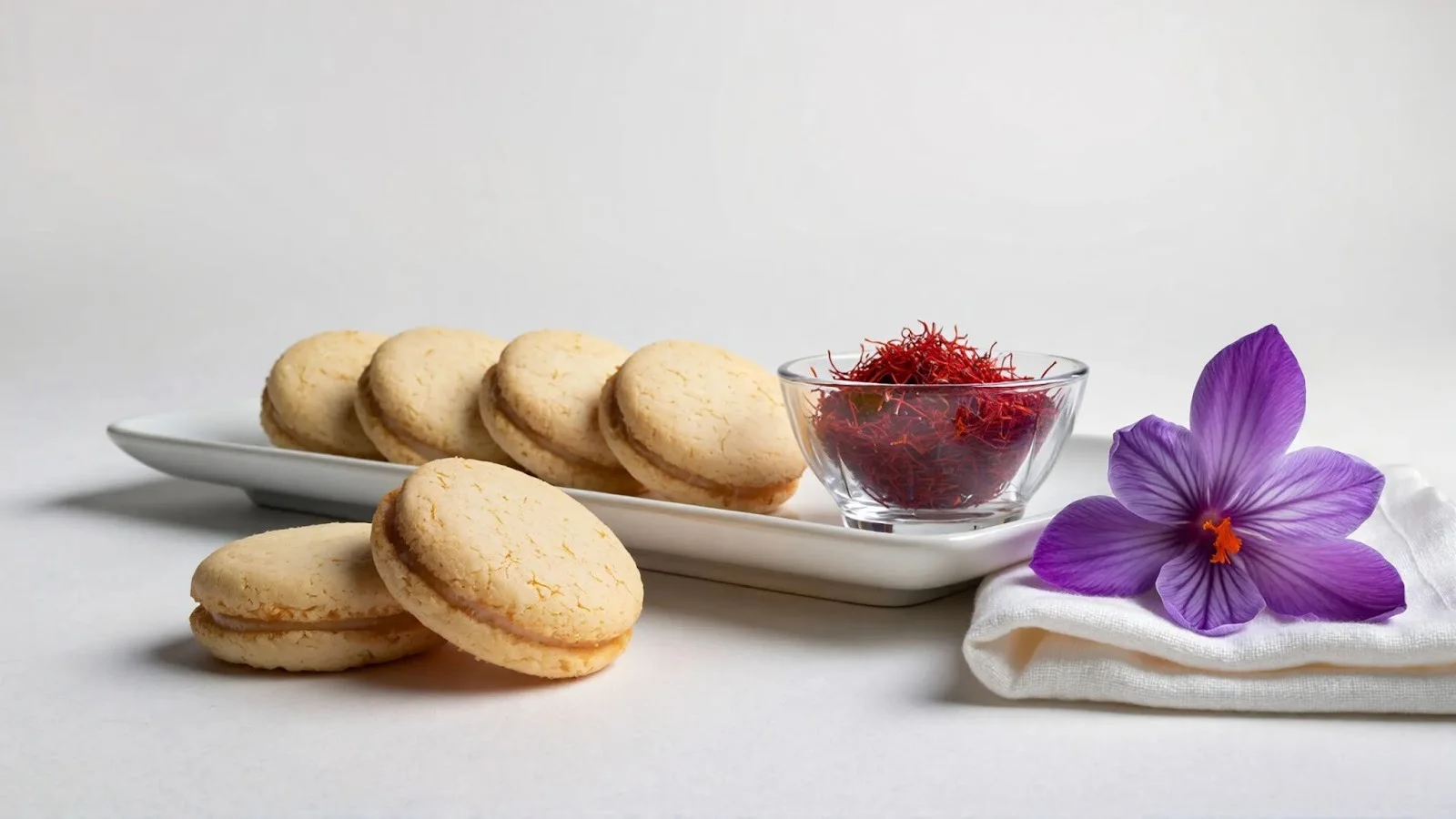
A stick covered in golden sugar crystals may look like ordinary rock candy, but adding real saffron turns it into something closely connected with Persian tea culture: saffron rock candy, or saffron nabat.
It is made by allowing a concentrated sugar syrup to crystallize slowly around a wooden stick or string. Saffron gives the crystals a warm golden color and a delicate floral aroma that pairs especially well with black tea.
You can buy saffron nabat ready-made, but making it at home is straightforward. The difficult part is not the recipe; it is leaving the jar undisturbed long enough for the crystals to grow.
Saffron rock candy is crystallized sugar flavored and colored with saffron. In Persian cuisine, this type of rock sugar is commonly known as nabat and is often served with tea or dissolved in other warm drinks.
The basic process is the same one used to make regular rock candy: sugar is dissolved in hot water until the solution becomes highly concentrated. As the syrup cools and sits undisturbed, sugar molecules gradually form larger crystals around a seeded stick or string.
Saffron turns the otherwise clear or white candy pale yellow to deep gold, depending on how much is used. More importantly, genuine saffron contributes aroma and flavor, not just color.
Nabat may be sold as individual crystals, irregular chunks, crystallized strings, or the familiar rock candy sticks used for stirring tea.
Saffron rock candy tastes primarily sweet, followed by subtle floral, earthy, honey-like, and slightly bittersweet notes.
Because sugar is the main ingredient, sweetness remains the dominant taste. Saffron adds a gentler layer of aroma and flavor rather than overpowering the candy. If you are wondering what does saffron taste like, its profile is often described as floral, earthy, honey-like, hay-like, and subtly bitter.
Good saffron nabat should not taste artificially fruity or strongly perfumed. A very bright yellow color without a noticeable saffron aroma may indicate that additional coloring or flavoring has been used.
Making saffron rock candy requires only three main ingredients, but crystal formation takes patience. Allow about 5 to 7 days for noticeable crystals to develop around the sticks.
This recipe makes approximately 3 to 4 rock candy sticks, depending on the size of the jars and how heavily the crystals form.
For a stronger saffron aroma, you can use a slightly larger pinch of threads. Avoid adding excessive saffron simply to deepen the color, as too much can introduce noticeable bitterness.
Safety note: Concentrated sugar syrup becomes extremely hot and can cause serious burns. Keep children away from the stove, use heat-safe containers, and do not touch or taste the syrup until it has cooled.

Reserve about 1 tablespoon of the measured water.
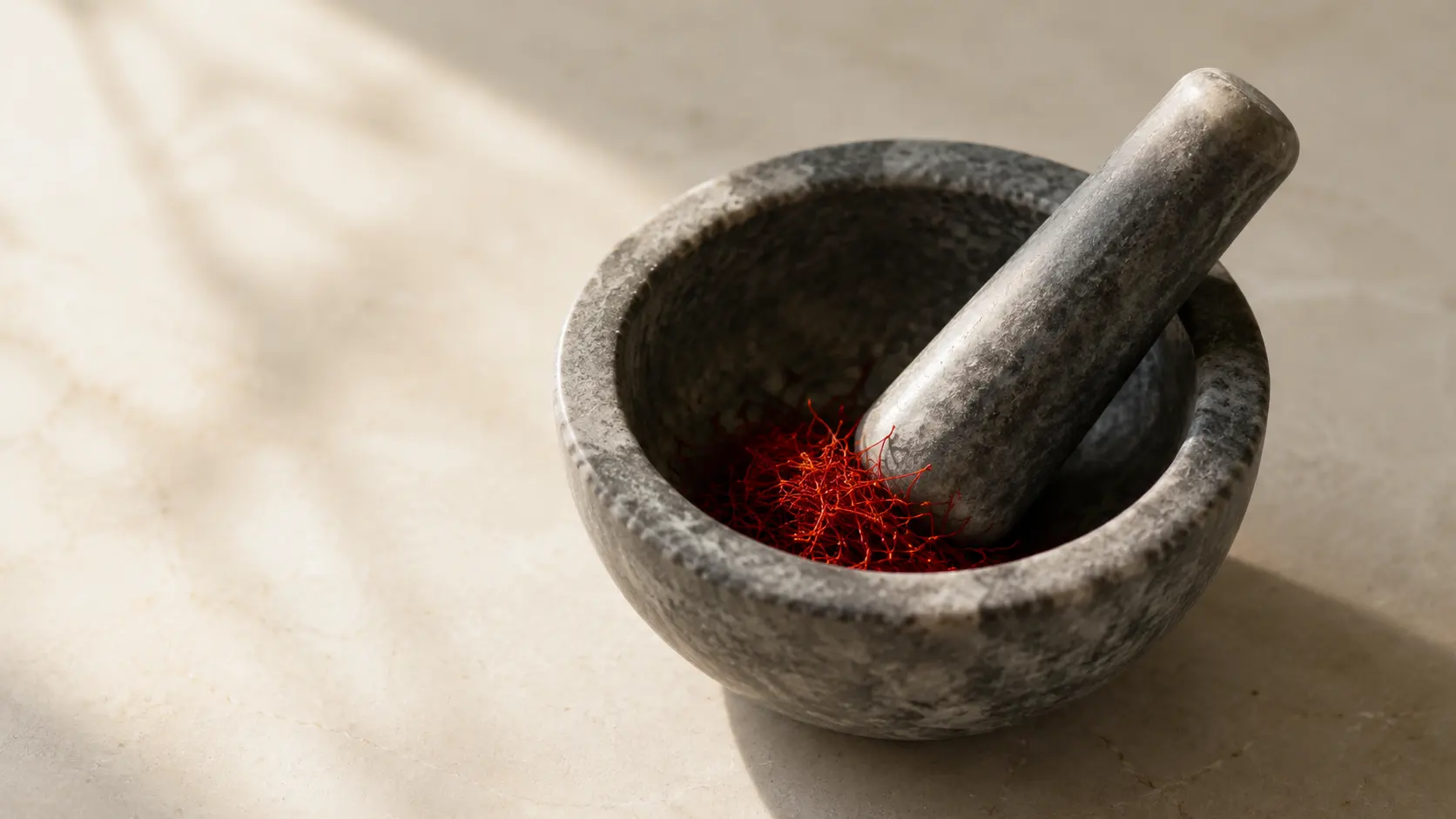
Place the saffron threads in a completely dry mortar and gently crush them into small particles. Adding a pinch of sugar can create extra friction and make the threads easier to grind. If you do not have the necessary tools, these methods for how to grind saffron without mortar and pestle offer practical alternatives.
Mix the crushed saffron with the reserved warm water and allow it to infuse for approximately 10 minutes. Understanding how to bloom saffron correctly helps release and distribute its color, aroma, and flavor more evenly throughout the syrup.
Lightly wet the portion of each wooden stick where you want the crystals to grow.
Roll the damp sticks in granulated sugar until they are covered with a thin layer of crystals. Set them on a clean plate and allow them to dry completely for at least one hour.
Do not skip this step. The small sugar grains act as nucleation points, giving the dissolved sugar an easier place to begin forming larger crystals. If the coating is still wet when the sticks enter the syrup, much of it may simply dissolve.
Pour the remaining water into a saucepan and bring it to a gentle boil.
Add the sugar gradually rather than all at once. Stir after each addition until the sugar dissolves before adding more. Continue until all 3 cups have been incorporated and the liquid looks clear rather than grainy.
Once the sugar has dissolved, let the syrup simmer gently for about 3 to 5 minutes. Remove it from the heat and stir in the prepared saffron infusion.
Let the syrup cool for approximately 10–15 minutes before transferring it to heat-safe jars.
The goal is a concentrated solution containing more dissolved sugar than the cooler liquid can comfortably hold. As the syrup sits, excess sugar gradually leaves the solution and joins the growing crystals.
Divide the saffron syrup between clean, heat-safe jars.
Place one prepared stick into each jar. Use a clothespin or clip across the top to keep it suspended. The stick should:
If the stick touches the glass, the candy can grow onto the jar and become difficult to remove intact.
Loosely cover each container with a clean paper towel or coffee filter to protect the syrup from dust.

Place the jars somewhere they will not be shaken, moved, or exposed to large temperature changes. Then leave them alone.
Small crystals may become visible within a day or two, while larger formations usually require 5–7 days. A longer resting period can sometimes produce heavier crystals, although eventually much of the available sugar will already have crystallized.
Avoid repeatedly lifting or turning the sticks to check their progress. Movement can disrupt crystal formation.
If a hard sugar crust forms across the surface, gently break enough of it to free the stick before removal rather than pulling forcefully.
Once the crystals have reached the size you want, carefully lift each stick out of the syrup.
Suspend the finished candy over an empty, clean jar or place it on parchment paper so excess syrup can drain away. Allow it to dry completely before storing.
Your saffron rock candy is now ready to serve with tea.
Both candies are made through essentially the same crystallization process. The difference is what saffron adds to the finished product.
| Feature | Saffron Rock Candy | Regular Rock Candy |
|---|---|---|
| Main ingredient | Sugar | Sugar |
| Added flavor | Real saffron | Usually none or added flavoring |
| Color | Golden yellow | Clear, white, or artificially colored |
| Aroma | Floral, warm, and slightly earthy | Mostly neutral unless flavored |
| Traditional association | Persian tea and nabat | General confectionery |
| Best use | Tea, warm drinks, and serving as nabat | Candy, decoration, and sweetening |
| Typical cost | Higher because it contains saffron | Usually lower |
Regular rock candy works well when all you need is sweetness. Saffron nabat makes more sense when you want the aroma, golden appearance, and Persian tea experience that comes from using the spice itself.
The most natural use for saffron rock candy is as a slow-dissolving sweetener for hot drinks.
Try it with:
You can also break larger pieces into smaller crystals and serve them alongside tea rather than placing them directly in the cup.
Crushed saffron rock candy can be used as flavored sugar in desserts, but it is rarely the most efficient way to introduce saffron into a recipe. Properly bloomed threads provide greater control over flavor and color when using saffron in cooking.

A simple cup of black tea is one of the best ways to appreciate saffron nabat because the slight bitterness of the tea balances the sweetness of the sugar.
Brew the tea first, then place one saffron rock candy stick in the cup and stir briefly. Taste before allowing more candy to dissolve.
There is no universal number of seconds or grams to use because rock candy sticks vary greatly in size. Treat the stick like a spoonful of sugar that you can stop adding at any time: stir, taste, and remove it when the tea is sweet enough.
For guests, place individual nabat sticks beside the teacups so everyone can control the sweetness of their own drink.
Cardamom pairs naturally with saffron and black tea. Rose water can also be added in very small amounts if you prefer a more floral Persian-style flavor profile.
One practical detail matters: do not return a wet, tea-dipped candy stick to the storage container. Moisture makes the remaining crystals sticky and can introduce contaminants to otherwise dry candy.
Saffron rock candy is best understood as a traditional sweetener containing saffron, not as a saffron supplement or medical remedy.
Saffron contains compounds such as crocin, crocetin, picrocrocin, and safranal. Research into possible saffron benefits generally examines measured doses or standardized extracts rather than candy.
For example, a 2026 systematic review and meta-analysis of 34 randomized controlled trials reported improvements in some depression, anxiety, and mood outcomes after saffron supplementation. The results were not significant across every measure, and the authors noted the need for further high-quality research.
Those findings do not show that saffron rock candy produces the same effects. Clinical trials use measured quantities of saffron or standardized preparations, whereas the amount of saffron consumed from a candy stick can be small and highly variable.
Traditional Persian use also associates nabat with comfort during digestive discomfort or nausea. That cultural practice is worth recognizing, but it is not proof that saffron rock candy treats digestive disorders.
From a nutritional perspective, rock candy remains primarily crystallized sucrose. The FDA's guidance on added sugars lists a Daily Value of 50 grams based on a 2,000-calorie diet and recommends limiting added sugars to less than 10% of daily calories.
The most defensible benefits of saffron rock candy are therefore culinary and cultural:
If you are managing diabetes, blood glucose, carbohydrate intake, or added sugar consumption, count saffron rock candy as sugar rather than as a health product. Ask a qualified healthcare professional for advice that fits your individual needs.
Keep saffron rock candy completely dry in an airtight container at room temperature.
Moisture is the main enemy of rock candy. Sugar readily attracts water, causing the crystal surface to become sticky and eventually dissolve.
For better storage:
Refrigeration is generally unnecessary and may expose the candy to condensation when the container is opened. The sugar itself is highly shelf-stable when kept dry, although the saffron aroma may gradually become less pronounced during extended storage.
Saffron rock candy is simple food with a slow process behind it: sugar, water, saffron, and several quiet days while the crystals grow.
That patience is part of what makes homemade nabat interesting. The finished stick is more than colored sugar; it carries saffron's characteristic aroma and turns an ordinary cup of tea into something closely connected with Persian serving traditions.
If you plan to buy saffron for making rock candy, look for whole threads with a recognizable aroma and a naturally deep red color rather than artificially flavored or brightly colored substitutes.
Saffron rock candy is a type of nabat, the Persian term commonly used for crystallized rock sugar. However, not every type of nabat contains saffron. Nabat can also be plain or flavored with other ingredients.
Traditional saffron rock candy is made with real saffron threads or a saffron infusion. Commercial products vary, so check the ingredient list if you specifically want candy made with genuine saffron rather than artificial color or flavor.
Yes. Saffron rock candy is commonly used to sweeten hot tea. Place a stick or small crystal in the cup, stir until the tea reaches your preferred sweetness, and then remove the remaining candy.
There is no standard amount because rock candy pieces vary in size. Start with one small piece or briefly stir one stick through the tea. Taste it before allowing more to dissolve.
Yes, provided it is pure saffron powder rather than a seasoning blend or artificially colored powder. Use only a small amount because finely ground saffron disperses quickly. Whole threads are easier to inspect for quality and provide better control over the quantity used.

Zoe Grace Carter is a passionate food scientist with a remarkable academic background, holding a PhD from the prestigious Cornell University. At the youthful age of 30, she brings a wealth of knowledge and expertise to the world of culinary exploration. Zoe is on a mission to unravel the mysteries of saffron and share her insights with the world through her captivating writings on Goldensaffron.com.


 Featured Product
Premium Grade I · Lab Tested · Secure Checkout
You have no items in your shopping cart.